
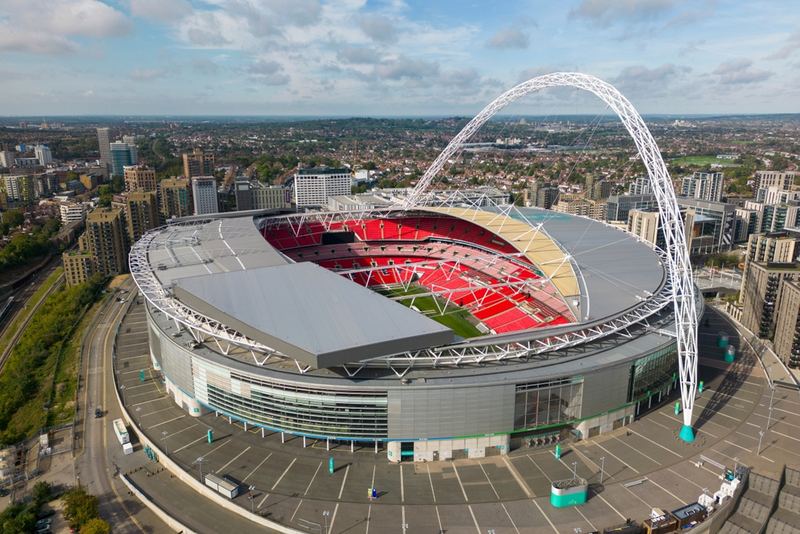
With the 2026 World Cup long since settled, the next major tournament as far as European fans are concerned is Euro 2028. That might seem a long way away, but time flies when you’re having fun, and with plenty of great football to enjoy between now and then, there is lots of fun to be had! Or we might just be getting old. Time flies when you’re old too.
Although Euro 2028 is the next really serious tournament England, Spain and the other top European nations will be taking part in, before that gets underway there is also the 2026/27 Nations League. That runs from late September 2026 through to June 2027.
The draw for Euro 2028 will not take place until 6 December 2026, and so the Nations League will give us lots of pointers to how the Euros might play out before we even know what the groups are. However, much as the Nations League has grown steadily in stature since its inception, it lacks the prestige and history of the World Cup or Euros.
Euro 2028: Key Dates
Before we look at some early odds for the next Euros, let’s consider the key dates you should have in your diary. As said, the group-stage draw will take place in December. That will be in Belfast. The Nations League plays a role here, though, as teams will be seeded for that draw based on their interim Nations League ranking.
| Round | Dates |
|---|---|
| Draw | 6th December 2026 |
| Qualifying Starts | 26th March 2027 |
| Play-Offs | March 2028 |
| Finals | 9th June to 9th July 2028 |
The next key date comes at the end of March 2027, when qualification gets underway. There will be 10 rounds of matches, starting on 26/27 March and 29/30 March – most of the rounds are double-headers, with nations playing twice during the relevant international break.
There are further games (two) in mid-June, before an extended four-fixture window between 23 September and 5 October. After that there is a double-header in mid-November to complete the standard qualification phase, with play-off semis and finals at the end of March 2028.
The tournament finals will then take place between 9 June and 9 July 2028. Assuming they qualify, Wales will feature in the first game on 9 June, and England will play a day later – if they make it. The semis will be on 4 and 5 July, with the final on 9 July.
Who is Hosting?
We have given a clue as to the hosts by noting that Wales are set to feature in the tournament’s curtain-raiser and the Three Lions will hope to play the day after that. Should they all make it, Northern Ireland will play their first group game on 11 June, followed by the Republic of Ireland a day later and Scotland the day after that.
If you have not yet pieced the puzzle together, Euro 2028 will be spread across the UK and Ireland. That said, the puzzle has a piece missing, because while Northern Ireland were one of the initial hosts, due to issues with stadia, they will no longer be holding any matches. Officially, therefore, Ireland, Scotland, Wales and England are the hosts, with nine venues being used.
| Venue | City | Country | Capacity |
|---|---|---|---|
| Wembley Stadium | London | England | 90,000 |
| Principality Stadium | Cardiff | Wales | 73,931 |
| Tottenham Hotspur Stadium | London | England | 62,850 |
| Etihad Stadium | Manchester | England | 61,470 |
| Hill Dickinson Stadium | Liverpool | England | 52,769 |
| St James’ Park | Newcastle | England | 52,264 |
| Hampden Park | Glasgow | Scotland | 51,866 |
| Aviva Stadium | Dublin | Rep. of Ireland | 51,711 |
| Villa Park | Birmingham | England | 50,000 (est) |
The national stadia of the four hosts will be used, along with the Premier League homes of Spurs, Man City, Everton, Newcastle and Aston Villa. Wembley will not host a fixture in the last 16 but will be used for one quarter-final, both semis and the final. In essence, then, this should be a home Euros for England, assuming they qualify and then top their group.
Do the Hosts Qualify Automatically?
At this stage we do not know who will be taking part, let alone who will win. The tournament remains a long way off, but we have heard a rumour that time flies. That aside, all four hosts have entered the qualification process because UEFA’s rules only offer automatic places for up to two hosts.
These two places will be used after qualification, if any of the hosts fail to make it through the standard process. In the unlikely event that more than two of them earn their spot, the highest-ranked (in qualifying) duo will be awarded the automatic places.
Housekeeping aside, and much as we love an underdog story, we feel that England are the only one of the hosts with a realistic chance of lifting the Henri Delaunay Trophy on 9 July. There have been major upsets in the Euros, unlike at the World Cup. Denmark won in 1992, and Greece in 2004, so anything is possible, but barring major shocks, the issue of which of the home nations do and don’t make it is moot. England should qualify, while we do not see Wales, Scotland or the Republic going all the way even if they do.
Current Odds
The odds for the 2028 European Football Championship will fluctuate in the weeks and months ahead. Performances in the Nations League will play a part, as will those of individual players for their clubs, as well as injuries. That said, barring any particularly unusual events, we would not expect to see anything too radical in terms of odds movements.
- Spain – 4/1
- France – 4/1
- England – 9/2
- Portugal – 7/1
- Germany – 8/1
- Field – 20/1 bar
Based on the odds it is clear that the bookies are viewing the Euros as a three-horse race right now, with Portugal and Germany as possible dark horses. It is very easy to see why they have reached that conclusion too.
Spain won the last World Cup in North America, while France and England made the semis of the global showpiece. Additionally, Spain won the last Euros, while France won the World Cup in 2018, made the final in 2022, and were beaten by Spain in the last four in 2026, despite being firm favourites. As for England, they are bidding to become just the second team ever (after West Germany in 1972, 1976 and 1980) to make the final of the Euros three editions running. Having lost the first two, they will hope it is third time lucky.
We could see an upset, as we have already touched on, but we suspect that almost all pundits will end up tipping one of the three favourites. Spain’s system of playing is so ingrained and familiar to their personnel, and so effective. Their squad is packed with young players who will only be better by 2028, and they will take some stopping.
That said, France’s attacking prowess is hard to discount, and despite having seemingly been around forever, Kylian Mbappe will only be 29 years old by the time of the Euros. Michael Olise will be 26, while Bradley Barcola and Désiré Doué will be 25 and 23 respectively.
And then we have England. Some key players, such as Jude Bellingham, Declan Rice, Marc Guehi, Bukayo Saka, Morgan Rogers and Cole Palmer will be at their peak. Thomas Tuchel will hope that youngsters such as Tino Livramento, Rico Lewis, Lewis Hall and Levi Colwill will develop to fill existing holes in the squad – and that Harry Kane can continue to defy Father Time! The Three Lions could play almost all their games at Wembley too, so maybe, just maybe, the years of hurt will end at 62!