
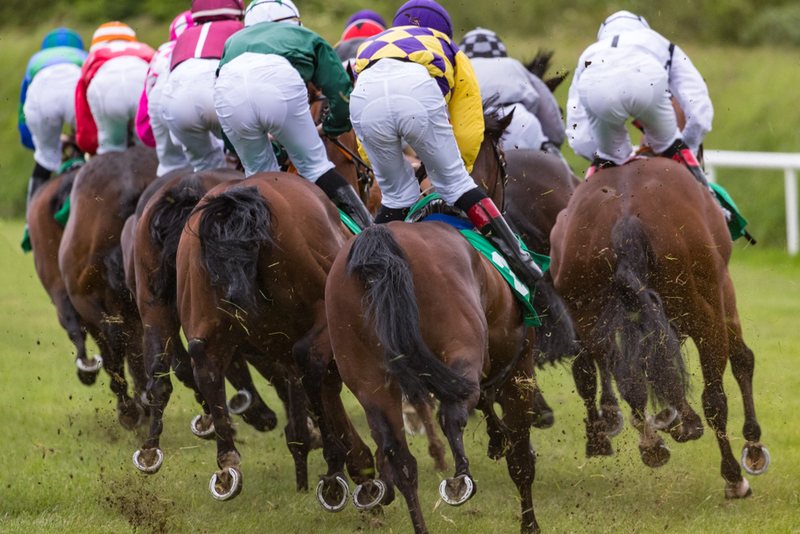
When it comes to live formats, a commentator is needed to fulfil two different jobs. Job one is to tell the viewer what’s happening. Job two is to feed excitement to the crowd.
Both are equally important, and being able to do them well takes time to learn, practice, and to become good at.
Accuracy You Can Trust
What do you want to know from our lead commentator? 🎙️ Ask Richard Hoiles a question by replying below and we’ll put the best ones to him on Saturday’s Opening Show 👇 #ITVRacing | #TheOpeningShow https://t.co/wD2J3Q2OcV
— ITV Racing (@itvracing) September 4, 2026
The first thing a commentator adds is the confidence that the name that’s being called out is the horse you’re looking at.
Richard Hoiles has been ITV Racing’s main commentator since 2017. When asked what makes a good commentator, he plainly said “Accuracy” to defend this point.
He mentioned that if a commentator is constantly getting horse names mixed up, they won’t last very long. What many people don’t know is that commentators like Hoiles prep a lot. Behind the scenes, there’s often a colour-coded prep sheet, the silks printed and learned, and ten to fifteen minutes of detailed preparation before each race.
None of this is seen by the viewer, but it’s essential that what the commentator is saying is factual. This way, more people can trust the information they’re receiving all while enjoying the experience.
How Pundits Complete the Job

Commentators and pundits are actually two separate jobs. A commentator calls the action live while a pundit explains it before and afterwards.
Often, they work together, but the roles are separated. The goal here is to have a professional explain the action live, and another professional analyse the action before and afterwards.
Same Job, Different Styles
Ever wondered what goes into being a Premier League commentator? 🎙️ Conor McNamara takes us behind the scenes… https://t.co/fwvVE5q24T
— Premier League (@premierleague) March 27, 2026
Commentators can add to various different experiences, from darts all the way to online entertainment.
Darts, for example, thrives on having a commentator who calls out every score the moment the third dart lands. Russ Bray, the PDC’s best-known referee since the 1990s, has said the job is harder than playing. A referee has to add up every score while providing excitement to the viewer.
Snooker is similar, but the commentators behave very differently. Dart commentators are loud and energetic, while snooker commentators are quiet, often silent, and only speak when the timing is right.
With casino games live like blackjack, commentators add to the experience by engaging with the players and the cards they’re dealing. This type of commentary is very personal, adding to the live experience, as this is how the dealer would behave in a real casino.
All three sports require commentators to build an atmosphere. However, they do it in remarkably different ways that take time to practise and learn.
Will Live Commentary Change?
All commentators borrow from one another. Football borrows from horse racing, horse racing borrows from F1, F1 borrows from athletics, and so on.
However, they’re all very individual. A horse racing commentator who’s used to rapid-fire commentary may not perform as well in a slower sport, such as golf, and vice versa. Of course, some talents may cross over, but generally, we can expect live commentary to remain as is – sports/niche specific.