
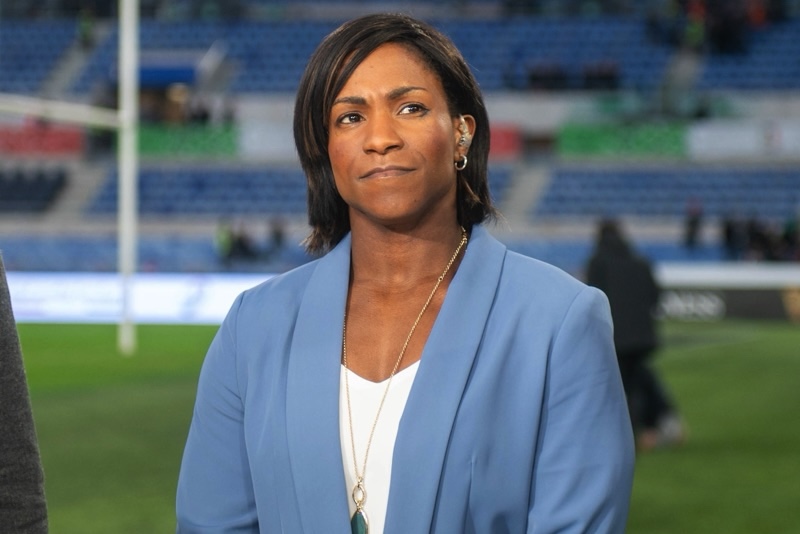
The sad truth about the women’s side of the majority of sports is that they are still tragically underrated. As a result, some of the top names in the game continue to be men. Thankfully, that is changing, even if far too slowly, with people such as Maggie Alphonsi able to break through the glass ceiling even after retirement.
That has allowed her to forge a career for herself in the media, long after her decision to hang up her boots, becoming a recognised name in terms of her work covering her former sport. She is also an MBE, having been given the award as part of the 2012 Birthday Honours for Services to Rugby.
Alphonsi in the Media
UK Sportswoman of the Century! 🚨
Wow…..I’m truly honoured to be part of this amazing list of fantastic athletes, many of which I looked up to whilst I was progressing in my sporting career.
The voting is now open and closes at 10:00 BST on 29th August 2025. Results will be… pic.twitter.com/RzFyUisdHu
— Maggie Alphonsi MBE (@MaggieAlphonsi) August 25, 2025
When Maggie Alphonsi announced her international retirement in 2014, in the wake of England’s Rugby World Cup victory in France that same year, the sport lost one of its most destructive openside flankers. What broadcasting gained, however, was a voice that would go on to break ground in a manner that extended well beyond rugby itself. The move into the media was not an entirely unfamiliar one even before her retirement, but it accelerated sharply once her playing days were over and the role she carved out for herself would prove historically significant. In 2015, Alphonsi was named as part of ITV’s broadcast line-up for the Rugby World Cup that year.
First Woman to Report on Men’s International Rugby
That made her the first ever former female player to commentate on men’s international rugby, which she described as being an honour. Her concern ahead of the tournament had been that she might face scepticism from audiences unused to hearing a woman analyse the men’s game, but in the end she recalled that people did not appear to see her gender and instead saw a technical expert in back-row play whose knowledge had been earned the hard way. Having played in a World Cup herself, she knew exactly what it took to be there. She continued to work with ITV Sport across their rugby coverage following the World Cup.
First Female Rugby Player to Become a Columnist
That included as part of the broadcaster’s Six Nations coverage before she established herself as a media professional by providing live commentary for Sky Sports, BT Sport and the BBC. She also featured in a diverse array of outlets beyond rugby coverage, from Stella Magazine to the BBC’s Children in Need and The One Show. In print, Alphonsi made further history when she became the first former female rugby player to become a columnist for a national newspaper, contributing her thoughts and opinions regularly to The Telegraph.
That role was notable not merely as a personal achievement, but as an indicator of how far women’s rugby had gone in terms of mainstream recognition. Her column work for The Telegraph was written in collaboration with Gavin Mairs, the paper’s chief rugby correspondent, with whom Alphonsi co-wrote her 2023 autobiography, Winning the Fight. The book was shortlisted for Autobiography of the Year at the Charles Tyrwhitt Sports Book Awards. One broadcasting moment stands above the rest in her own estimation. Alphonsi has spoken about the 2019 Rugby World Cup semi-final between England and New Zealand.
Prominent Rugby Analyst for Sky Sports
That is arguably the occasion that still gets to her most as a broadcaster, being a match in which England produced one of their most commanding performances to reach the final in Japan. Her presence at that tournament, years on from her breakthrough in 2015, showed how she had managed to establish herself in the world of sports broadcasting. She has continued to be a prominent rugby analyst for Sky Sports, providing her thoughts in the studio as well as offering co-commentary for domestic and international fixtures, ensuring a career in media that has proven to be every bit as pioneering as the one she enjoyed on the pitch.
Alphonsi the Player
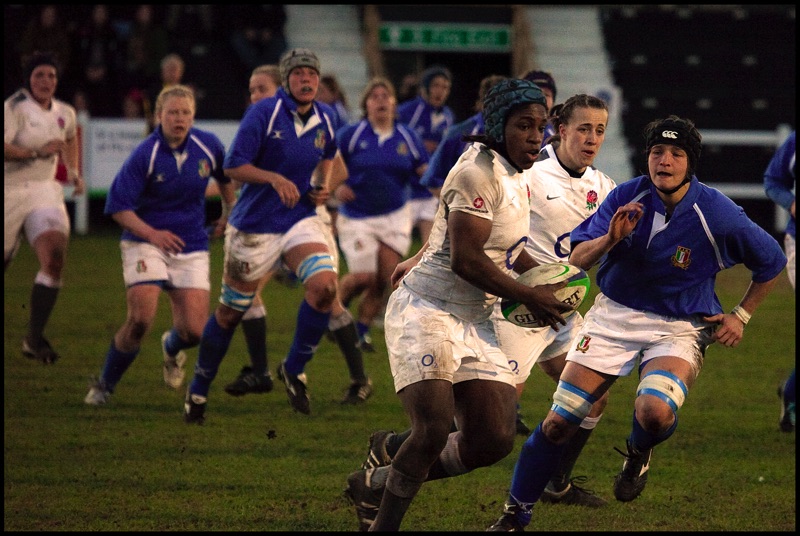

Margaret Omotayo Sanni Alphonsi was born in Lewisham, South London, on the 20th of December 1983. Born to a single-parent family and having a club foot, she worked hard to train on it in order to allow her to play rugby. Having undergone corrective surgery on the issue, she discovered the sport of rugby at school before having her ability recognised by coaches at a local community programme. Her debut for the England Women’s Rugby side came in 2003, demonstrating her explosive pace as a flanker whose tough-tackling ability and tactical intelligence saw her quickly establish a name for herself in the sport.
She was part of a golden era with the England team, winning seven Six Nations Championships in succession, of which six were Grand Slam victories. Her career pinnacle came in 2014 when she was part of England’s Rugby World Cup triumph, coming after several near misses in the competition previously. She decided to bow out of the sport on a high, retiring from international rugby at the end of the year. She had continued to set records, however, becoming the first woman to win the Rugby Union Writers’ Club’s Pat Marshall Award. She also remained involved in the sport even after her retirement, being a Rugby World Cup Ambassador in 2015.
Away from the rugby field, Alphonsi gained an MSc in Sports & Exercise from Roehampton University, as well as a BSc in the same subject from DeMontford University and a National Diploma in Leisure Studies from Hertford Regional College. The University of Bedfordshire awarded her an honorary Doctor of the Arts degree too. In the wake of her rugby career, she worked with British Athletics in order to attempt to win an Olympic gold medal in shot put, having also thrown discus when at school. That she was able to achieve all of that with the club foot that she was born with was a remarkable achievement.