
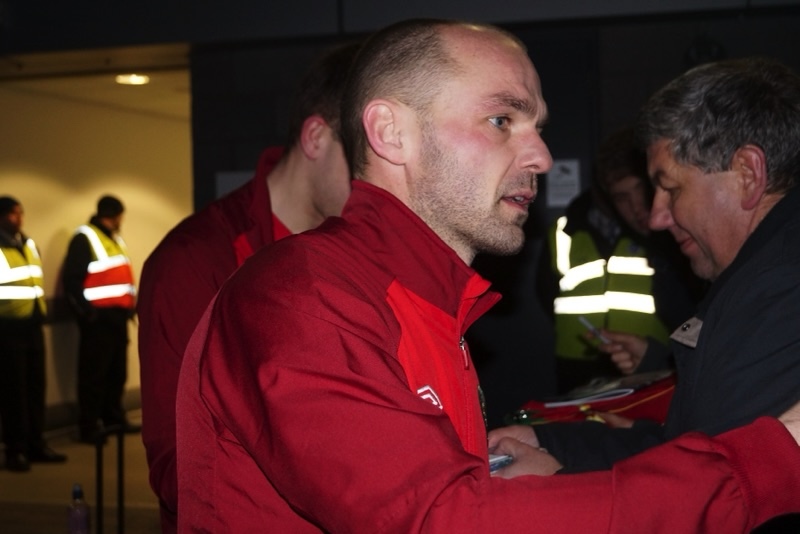

Few visiting players have enjoyed Old Trafford quite like Danny Murphy. Between 2000 and 2004, he scored the only goal in three separate 1-0 Liverpool wins at Manchester United’s home, which is a habit that no amount of expensively assembled forward lines have managed since.
It also made him a cult figure on one half of the East Lancs Road and a nuisance on the other. These days, he passes judgement on such afternoons from the Match of the Day studio, where he has been a fixture for more than a decade, having started the punditry before he had even finished playing.
Murphy in the Media
Danny Murphy made his debut as a Match of the Day pundit on the 18th of August 2013, whilst still technically an active footballer, and only announced his retirement on the tenth of October that year, by which point his second career was already up and running. He has been part of the programme’s rotation ever since, surviving into the revamped post-Gary Lineker era, and in the 2025-2026 season he appeared alongside the likes of host Kelly Cates and fellow pundit Wayne Rooney. He has also built a substantial radio career at talkSPORT.
Concentrates on Structure
There, his Premier League analysis and predictions are a regular feature and he was amongst the voices working on the World Cup coverage in the summer of 2026. His stock in trade is tactical detail rather than manufactured outrage. Murphy’s analysis tends to concentrate on the structure of a game, on why a full-back was left exposed or a midfield overrun, and it reflects the player he was, given the fact that Liverpool’s assistant manager Phil Thompson once described him as ‘probably the most tactically aware player that we have’.
Candid Honesty
Television eventually reached the same conclusion as Thompson, and whilst he is willing to deliver a hard verdict on a struggling team or manager, he has never needed to shout to be heard. He has also been unusually honest about the difficult side of life after football. In 2024, Murphy revealed that he had struggled badly with the loss of the game after retiring and had turned to cocaine and cannabis to cope, at one point becoming addicted to cocaine, which was an admission that he made publicly in the hope of helping other former players.
That kind of candid honesty lends real weight to his punditry whenever the conversation turns to player welfare. There are many who think he is biased towards Liverpool, which is ironic considering the fact that supporters of the most successful club in the country are of the opinion that he actively dislikes his former club. Perhaps the truth lies somewhere in the middle, or else he’s just not able to maintain balance one way or the other. Away from the studio, he was married to the actress Joanna Taylor, with whom he has two children, the couple separating in 2017.
Murphy the Midfielder
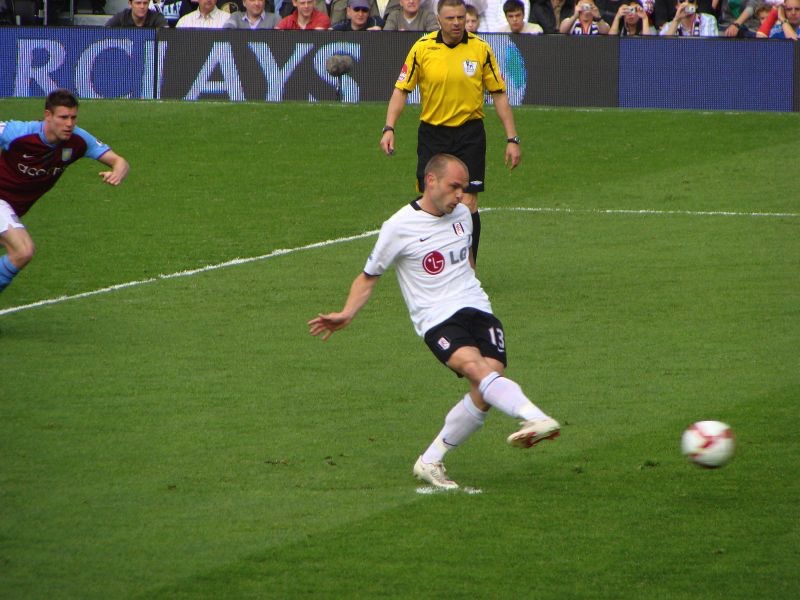
Daniel Ben Murphy was born in Chester on the 18th of March 1977, into a footballing family as the nephew of the Futcher brothers and he came through the ranks at Crewe Alexandra under Dario Gradi, the manager he has always credited as his mentor. He made his first-team debut at 16 in the December of 1993 and developed into the creative heart of the side, scoring long-range goals and set-pieces in numbers unusual for a teenager. In 1997, he helped Crewe win the play-off final at Wembley, beating Brentford 1-0 to reach the second tier for the first time since 1896.
Liverpool paid an initial £1.5 million for him in the summer of 1997, but forging an Anfield career took time. Murphy barely featured in his first two seasons and was loaned back to Crewe in 1999, helping his old club avoid relegation, before returning to establish himself in spite of the competition provided by the likes of Steven Gerrard and Dietmar Hamann, which often pushed him out wide. He was part of the side that won the FA Cup, League Cup and UEFA Cup treble in 2001, although injury cost him a place in the League Cup final itself.
He managed to put that right by starting the 2003 final, where Liverpool beat Manchester United. His best individual season came in 2002-2003, when he scored 12 goals and was voted the supporters’ player of the season. The England career was more fitful, bringing nine caps between 2001 and 2003 and a single goal against Paraguay in the April of 2002. Perhaps its cruellest moment came when he was called into the 2002 World Cup squad to replace the injured Gerrard, only to suffer a foot injury of his own and withdraw before a ball was kicked.
Murphy left Liverpool for Charlton Athletic in the August of 2004 for £2.5 million, winning a Premier League Player of the Month award there, before an unhappy year at Tottenham Hotspur preceded Fulham taking him to Craven Cottage in the August of 2007. It turned out to be the defining move of his thirties. His headed goal away at Portsmouth on the 11th of May 2008, a method of scoring he almost never used, kept Roy Hodgson’s Fulham in the Premier League on the final day, and he was made club captain that summer.
Two years later and he led the club on the most improbable run in its history, past the likes of Juventus, holders Shakhtar Donetsk and German champions Wolfsburg, to the Europa League final of 2010, where Fulham lost 2-1 to Atlético Madrid to a goal scored four minutes from the end of extra-time. Even in his final Premier League season, at the age of 35, he created more goalscoring chances than any other player in the top-flight. A last year captaining Blackburn Rovers in the Championship followed before he retired in 2013, moving behind the camera full-time.