
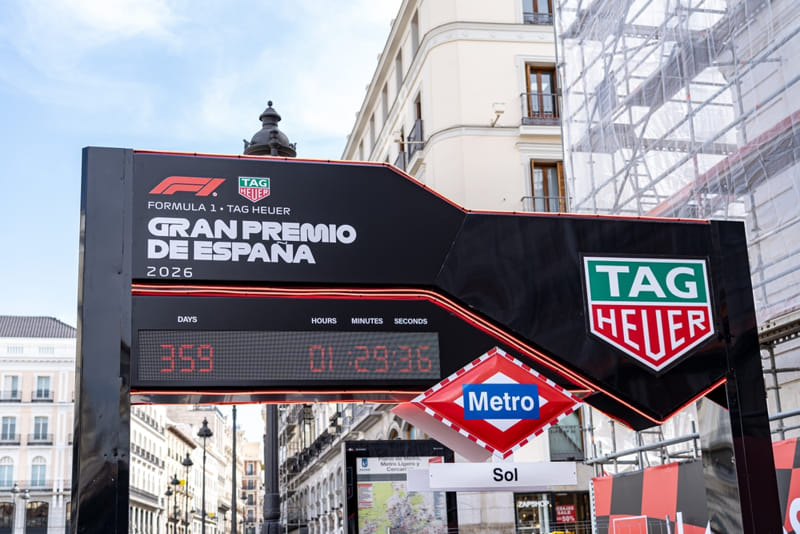
Formula 1 arrives at the new Madring circuit this weekend as Madrid hosts the 2026 Spanish Grand Prix. Practice begins on Friday 11 September, qualifying takes place on Saturday, and the inaugural race starts at 3pm local time on Sunday 13 September.
The Grand Prix comes one week after Kimi Antonelli produced a remarkable victory at Monza. The Mercedes driver started 19th following a power-unit penalty but recovered to win ahead of teammate George Russell, extending his championship lead to 66 points.
Motorsport audiences now follow race weekends through live broadcasts, timing applications, social media and entertainment services that may also include online roulette. Madrid adds something genuinely new to that schedule, as every driver must learn the circuit without relying on data collected during previous Grands Prix.
What Is the New Madring Circuit?
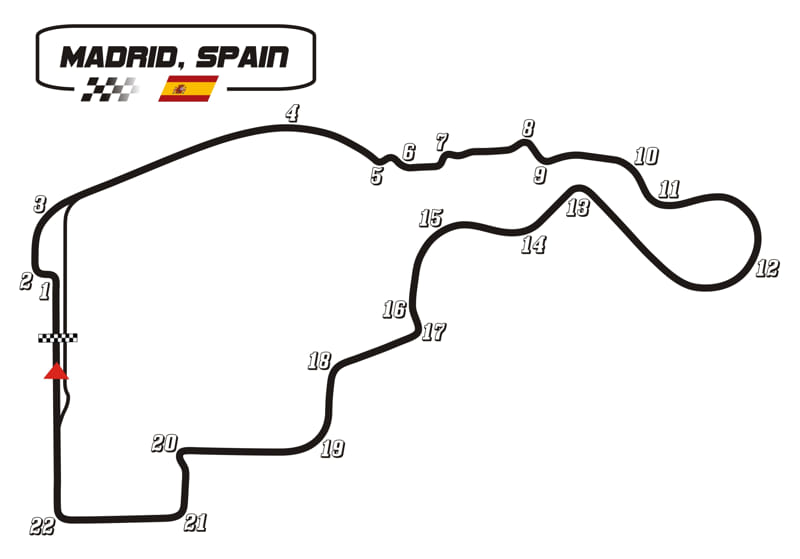
Madring is a 5.416-kilometre circuit built around the IFEMA exhibition centre and the Valdebebas area of Madrid. It combines public roads with purpose-built sections, creating a layout closer to Miami than a conventional temporary street circuit.
The track contains 22 corners and several changes in elevation. Drivers are expected to reach approximately 340 kilometres per hour on its fastest sections, while narrower areas place the cars close to walls and barriers.
The race is scheduled for 57 laps, producing a total distance of 308.524 kilometres. As this is the first Grand Prix held at Madring, no official Formula 1 lap record exists.
Teams have simulator data and information gathered during construction, but Friday practice will provide their first complete picture of the surface. Grip levels, tyre wear, bumps and wind direction may behave differently than predicted.
The combination of permanent and public-road sections could also produce inconsistent grip. Purpose-built asphalt tends to offer a cleaner and more predictable surface, while roads used by normal traffic can contain markings, repairs and dirt.
La Monumental Is the Corner Attracting the Most Attention
Turn 12, known as La Monumental, is Madring’s most distinctive section. The banked corner stretches for around half a kilometre and reaches a maximum banking angle of approximately 24 percent.
Drivers are expected to spend about six seconds passing through the turn. The banking should allow cars to carry considerable speed, although the fastest racing line may change as tyres wear during the Grand Prix.
A banked corner creates additional vertical load, helping the car maintain grip at higher speed. Drivers may have several possible lines, allowing one car to follow another without losing as much performance in disturbed air.
The exit could be particularly important because it leads towards Turn 13. A driver who stays close through La Monumental may be able to use the slipstream and attempt an overtake during the following section.
About 45,000 spectators can be accommodated around the corner. Its size and unusual geometry are intended to make it the visual centre of the venue, but its competitive value will depend on whether drivers can run side by side.
Antonelli Arrives with a 66-Point Championship Lead
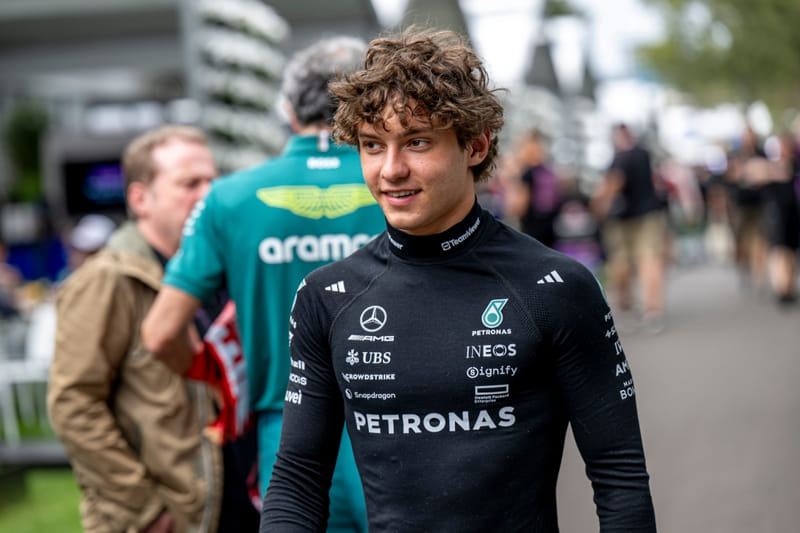
Kimi Antonelli leads the drivers’ championship with 267 points after winning the Italian Grand Prix. George Russell sits second on 201, while Lewis Hamilton is third with 191.
Antonelli has won seven races this season and now holds an advantage larger than the points available for two standard Grand Prix victories. That gives him some protection, but the campaign still contains enough races for the standings to change.
The 20-year-old’s performance at Monza strengthened his position considerably. Recovering after starting 19th required speed, effective tyre management and timely use of a virtual safety car. He eventually passed Russell with three laps remaining.
Madrid presents a different challenge. Monza rewards straight-line speed and efficient braking at chicanes, while Madring has more corners and little established racing data. The championship leader must learn the circuit as quickly as drivers with far more Formula 1 experience.
Russell needs to reduce the gap before Antonelli moves beyond realistic reach. His second place at Monza limited the damage, but losing the victory after leading much of the race was a missed opportunity.
Ferrari Need a Response after Monza
Ferrari endured a difficult home Grand Prix. Charles Leclerc crashed on the second lap, while Lewis Hamilton finished sixth and was unable to challenge the leading Mercedes cars.
Hamilton remains third in the championship, 76 points behind Antonelli. His victory at Barcelona earlier in the season proved that Ferrari can compete at the front when its car and strategy work together, but the team has struggled for consistency.
Madrid offers Ferrari an immediate opportunity to recover. A new circuit can reduce the value of established track records and give engineers more freedom to take a different setup direction.
That opportunity carries risk. If Friday data does not match the simulator, teams must make rapid decisions about ride height, wing level and suspension settings. Choosing the wrong direction can leave a driver correcting the car throughout the weekend.
Leclerc’s priority will be completing a clean practice programme. Losing track time at an unfamiliar venue would be particularly damaging because every lap provides information about braking points and tyre behaviour.
Carlos Sainz Faces a Second Home Race
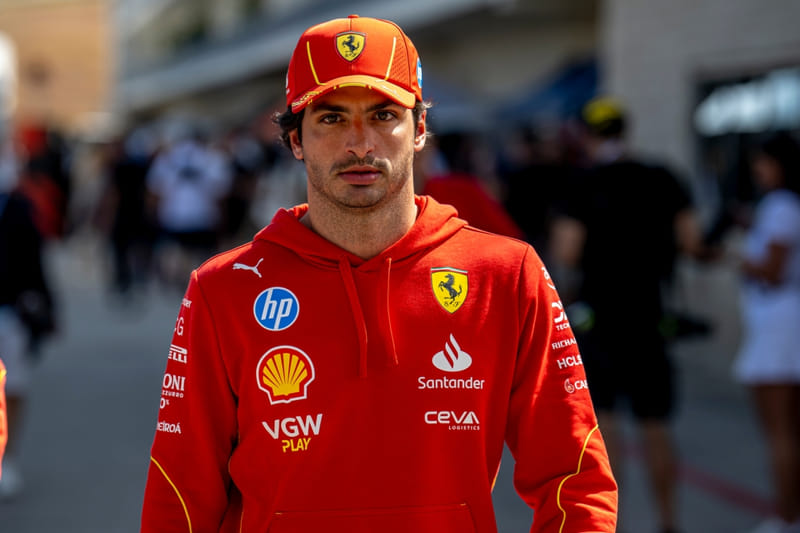
Carlos Sainz will compete in front of a Spanish crowd for the second time this season. Barcelona hosted a Grand Prix earlier in the campaign, but Madrid now takes the Spanish title on the calendar.
The Williams driver has spoken positively about Madring, particularly its mixture of fast and technical sections. His local knowledge does not provide much competitive advantage because he has never raced the complete circuit in Formula 1 machinery.
Home pressure may also complicate the weekend. Sainz will receive considerable attention during media sessions and public appearances, reducing the quiet preparation time available to many other drivers.
Fernando Alonso will attract similar support. Aston Martin arrive after both cars retired at Monza, making reliability as important as outright speed during the opening practice sessions.
A strong result for either Spanish driver would give the first Madring race a memorable local story. The competitive order suggests that reaching the podium will be difficult, but a new circuit can produce unusual results when leading teams encounter setup or reliability problems.
Qualifying Could Decide More than Usual
Track position matters on circuits where the walls leave limited space for overtaking. Madring has fast sections and possible passing opportunities, but its exact racing characteristics remain unknown.
Saturday qualifying will reveal how much the surface improves as more rubber is deposited. A rapid increase in grip could make the final minutes of each session particularly important, with drivers waiting to complete their laps as late as possible.
That creates a traffic problem. Twenty drivers may want the same section of track during the final moments, and a slower car preparing for a flying lap can interfere with somebody already at full speed.
Yellow or red flags are another danger. Contact with a barrier can stop the session and prevent other drivers from completing their final attempts. Teams must decide whether to set a safe time early or take the risk of waiting for better conditions.
Pole position will also provide the cleanest route into Turn 1. Without previous race starts for comparison, drivers will need to judge the braking point while carrying a full fuel load and competing for space.
Strategy Begins with Several Unknowns
Teams can estimate tyre wear, but the race will provide the first evidence under competitive conditions. Temperatures in Madrid during September may place additional stress on the tyres, especially through long corners such as La Monumental.
A one-stop strategy saves time in the pit lane but requires drivers to manage their tyres across longer stints. Two stops allow more aggressive driving, although the extra visit must be recovered through faster lap times.
Safety cars could alter those calculations. Barriers sit close to parts of the circuit, so a damaged car may be difficult to remove without neutralising the race.
The first Madrid Grand Prix is therefore unlikely to follow a completely predictable pattern. Drivers are learning the track, engineers are testing their simulations, and strategists have no previous Formula 1 race at Madring to study.
Antonelli begins the weekend as the championship leader and the winner of the most recent race. His rivals now have 57 laps around a new circuit to find out whether Madrid can interrupt his progress towards a first Formula 1 world title.